A battery storage project is one of the most compatible energy uses your community can host — no fuel, no emissions, no truck traffic in operation, and real property tax revenue.
A utility-scale battery energy storage system absorbs electricity from the grid when supply is abundant — typically overnight or during periods of high renewable output — and releases it back to the grid when demand peaks. That makes the grid more reliable, helps integrate renewable generation, and reduces the need to run expensive peaker plants during heat waves and cold snaps.
Each AM Energy project is enclosed in industrial battery containers behind a perimeter fence, on a gravel or paved pad, with electrical equipment and a small substation connecting to the existing transmission system.
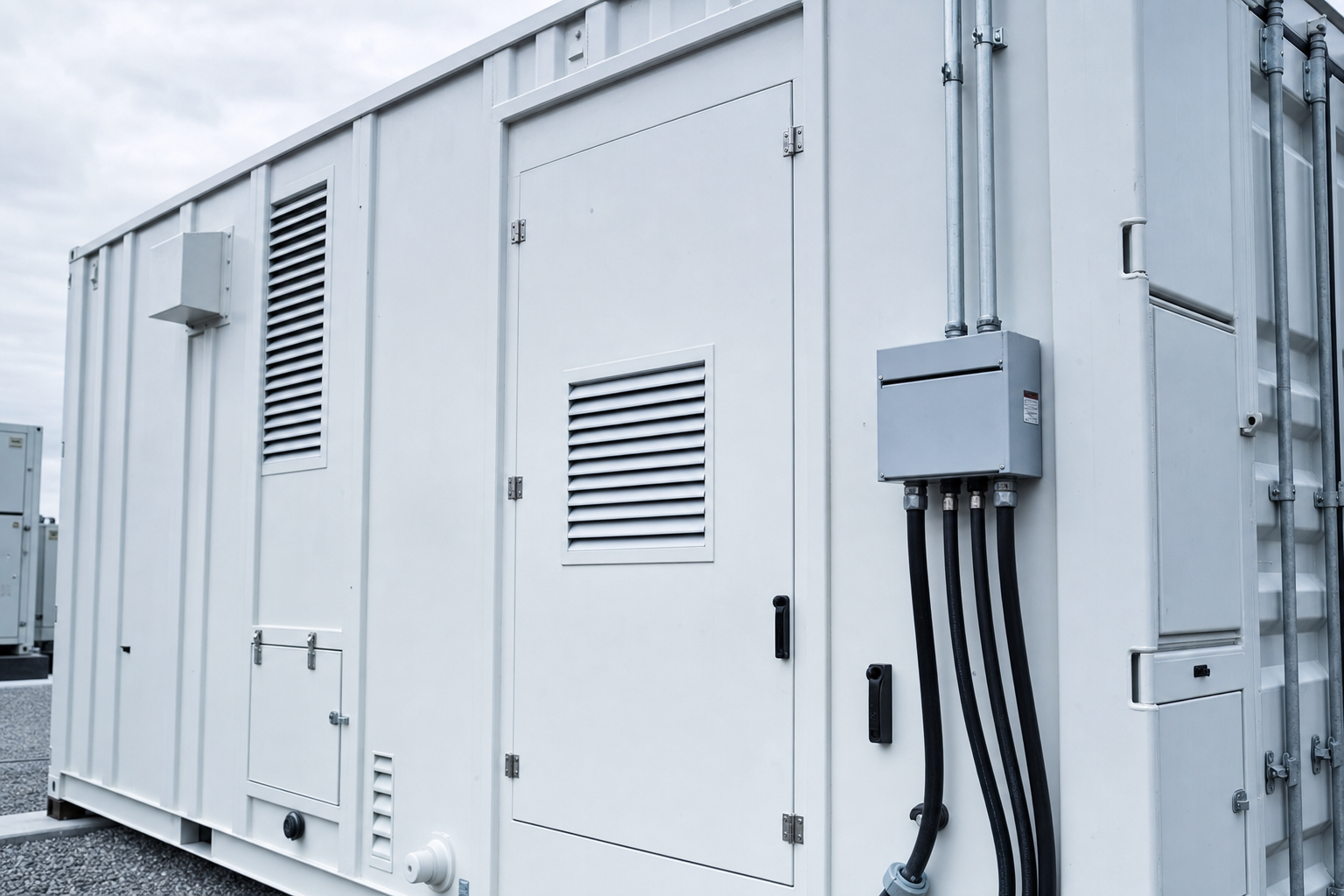
All AM Energy projects use battery systems certified to UL 9540 — the U.S. standard for energy storage system safety.
Site design and emergency response follow NFPA 855, the National Fire Protection Association's stationary energy storage system standard.
Before construction, we coordinate directly with local fire marshals and emergency responders on emergency response plans, training, and equipment specifics.
Every project is monitored 24/7 with thermal, gas, and battery management system sensors that trigger automatic protective actions.
Battery containers are sited with manufacturer-specified separations and perimeter setbacks from property lines, structures, and waterways.
Independent engineering and commissioning reviews are completed before any project goes into commercial operation.
Storage projects are significant local taxpayers, often becoming one of the largest single sources of property tax revenue in their host district.
Each project creates dozens to hundreds of skilled construction jobs during the 6–12-month build period, with priority for local trades where feasible.
Long-term lease income keeps land in family hands and supports local farms and small businesses.
We'd rather answer your question than have you guess. Email us anytime.